
How to Use Random Words for Writing Prompts
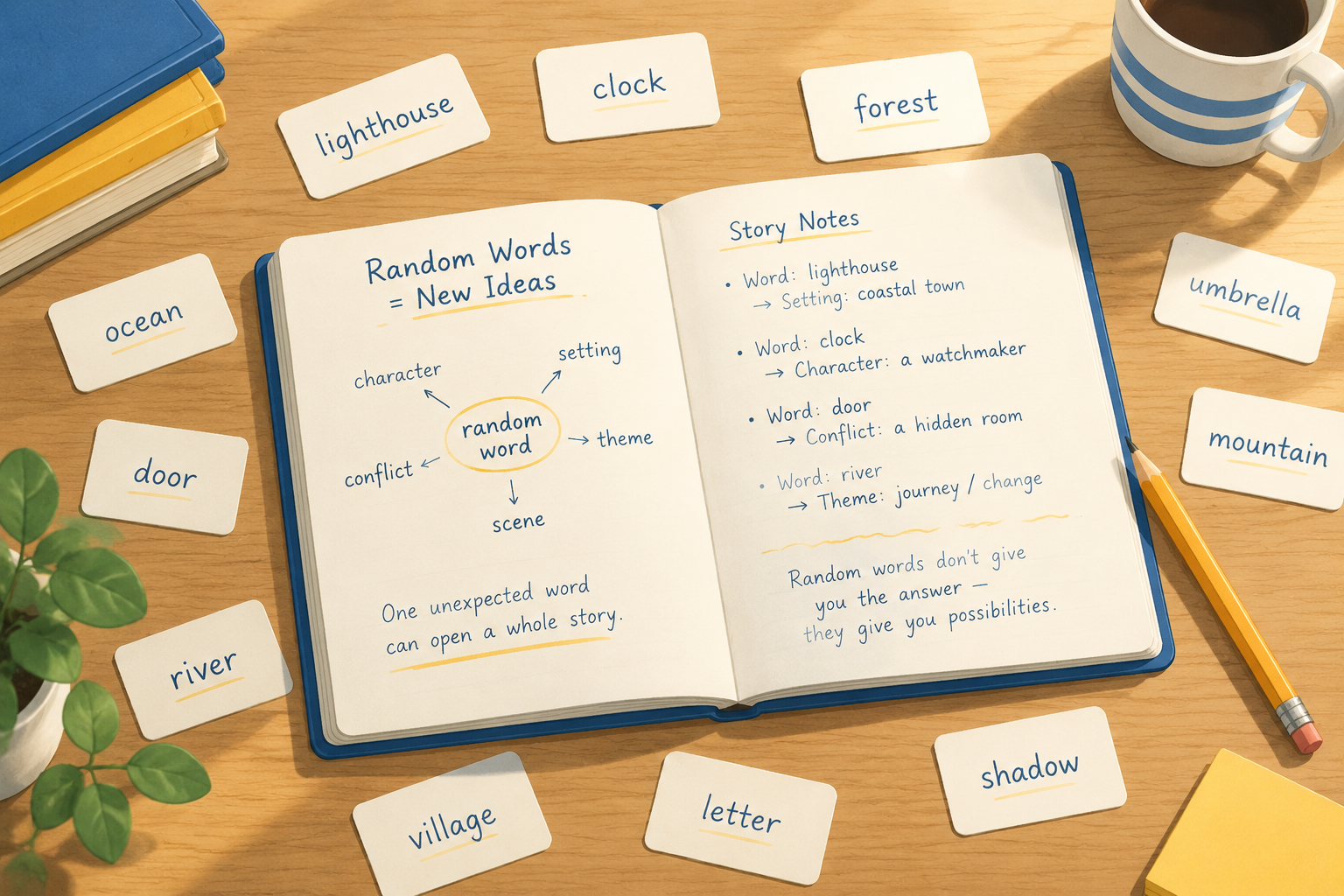
Creative writing often begins with a simple question: what should I write about? For many writers, the hardest part is not putting words together but finding the first idea. Random words can help solve that problem by introducing unexpected concepts, images, and connections that encourage fresh thinking.
Learning how to use random words for writing is a practical technique for beginners, experienced writers, students, and anyone who wants to make creativity a regular habit. A single unexpected word can become a character detail, a story setting, a conflict, a theme, or the starting point for an entire scene.
A random word generator can make this process faster by providing words without requiring you to decide what comes next. Instead of waiting for inspiration, you can create a challenge, respond to the words you receive, and train yourself to generate ideas more consistently.
What Are Random Word Writing Prompts?
A random word writing prompt is a creative exercise that uses one or more unrelated words as a starting point for writing. The goal is not necessarily to use the words exactly as they appear, but to explore the possibilities they create.
For example, imagine receiving these three random words:
- lighthouse
- winter
- envelope
A writer might turn them into many different ideas:
- A mystery about a forgotten letter hidden inside a lighthouse.
- A personal story about someone returning to a childhood winter home.
- A fantasy scene where a magical envelope reveals a secret location.
The words themselves do not contain the full story. They simply provide creative pressure that helps your imagination move in a new direction.
Why Use Random Words for Writing?
Random word exercises are useful because they interrupt predictable thinking. When you choose your own topics every time, you may return to familiar themes, settings, or character types. Random prompts introduce elements you might not normally consider.
Overcoming Writer's Block
A blank page can feel difficult because there are unlimited possibilities. Random words reduce that pressure by creating a specific starting point. Instead of asking, "What should I write?" you can ask, "How can I connect these words?"
This smaller question often feels easier to answer and can help you move from planning into writing.
Practicing Creative Connections
Strong stories often come from unexpected combinations. A random word exercise trains your brain to connect ideas that do not naturally belong together.
For example, combining "garden" and "machine" might lead to a science fiction story about automated plants, a comedy about a broken invention, or a reflection on technology and nature.
Building a Consistent Writing Habit
A daily writing routine with random words can make creativity feel more manageable. You do not need a complete novel idea every day. A short paragraph, character description, or scene sketch is enough to practice.
How to Use a Random Word Generator for Writing

Using a random word generator is simple, but the way you approach the results can change the quality of your writing. Here is a practical process.
Step 1: Generate a Small Set of Words
Start with one to five words. A single word works well for quick exercises, while several words create more complex challenges.
You can use a tool like the random word generator to quickly collect ideas. For more focused exercises, try a random noun generator when you want objects, places, or concepts to inspire your writing.
Examples:
- One word: "mirror"
- Three words: "river, clock, visitor"
- Five words: "forest, letter, shadow, key, music"
There is no perfect number of words. Choose the amount that creates a useful challenge without making the exercise overwhelming.
Step 2: Choose a Writing Challenge
Random words become more powerful when paired with a clear goal. Instead of simply writing anything, create a specific challenge.
Some examples include:
- Write a 500-word short story using all three words.
- Create a character inspired by one word.
- Write a scene where two unrelated words appear naturally.
- Describe a place based on a random object.
Different challenges develop different skills. A character exercise improves imagination about people, while a scene exercise helps with setting and atmosphere.
Step 3: Write Without Overediting
The first draft of a random word exercise does not need to be perfect. The purpose is exploration.
Try writing continuously for ten or fifteen minutes. Avoid stopping to judge every sentence. You can revise interesting ideas later, but first allow yourself to discover them.
Many creative breakthroughs happen when writers continue beyond their first obvious idea.
Step 4: Review and Expand Strong Ideas
After finishing your exercise, look for parts that could become something larger.
Ask questions like:
- Did a character seem more interesting than expected?
- Did a particular image create a strong mood?
- Could this scene become the beginning of a longer story?
- Is there a conflict hidden inside the prompt?
A random exercise does not have to stay a short exercise. It can become a foundation for a larger project.
Story Prompt Exercises Using Random Words
Random words can support many types of writing practice. Here are several exercises you can try.
The Character Creation Exercise
Generate a random noun and use it as inspiration for a character detail.
Example:
Random word: "compass"
Possible character ideas:
- A traveler who cannot remember where they have been.
- An explorer searching for a place that does not appear on maps.
- A person who inherits a mysterious compass from a stranger.
The word does not need to describe the character directly. It can represent a memory, goal, problem, or personality trait.
The Unexpected Combination Exercise
Choose two unrelated words and force them into the same story.
Example:
Words:
- bakery
- spaceship
Possible ideas:
- A baker preparing food for an interplanetary mission.
- A space station with a famous bakery.
- A future society where recipes are valuable technology.
This exercise is especially useful for fantasy, science fiction, and humorous writing.
The Setting Development Exercise
Use random words to build a location.
Example:
Words:
- ocean
- abandoned
- music
A writer might create a deserted coastal town where old songs play from empty buildings every night.
Adding details through random prompts can help settings feel more memorable.
Using Random Words in Classrooms and Group Activities
Random word exercises are also useful for teachers, writing groups, and creative workshops. They provide a shared starting point while allowing each person to create a different response.
A classroom activity might ask students to generate three words and write a short story that includes them. Students can then compare how differently they interpreted the same prompt.
For group writing games, participants can take turns adding sentences based on newly generated words. This creates collaboration and encourages flexible thinking.
Creating a Daily Writing Routine With Random Words
A simple routine can make creative practice easier to maintain.
Try this five-step daily method:
- Generate three random words.
- Pick one writing challenge.
- Write for ten minutes without editing.
- Highlight your favorite sentence or idea.
- Save the exercise for future projects.
The goal is consistency, not perfection. Regular short sessions can help you develop confidence and improve your ability to start writing quickly.
Tips for Better Random Word Writing Prompts
Combine Random Words With Themes
A random word becomes more useful when combined with a theme. Try categories such as:
- mystery
- adventure
- romance
- historical fiction
- personal reflection
- comedy
For example, the same word "bridge" can create a mystery story, a fantasy journey, or a personal memory depending on the theme.
Use Different Types of Words
Different word categories create different kinds of inspiration. Nouns often create objects and settings, verbs suggest actions, and adjectives influence mood.
You can explore different approaches with tools such as a verb generator or an adjective generator.
Save Your Favorite Prompts
Keep a collection of interesting word combinations. A prompt that does not inspire you today might become useful months later when you are working on a different project.
FAQ About Using Random Words for Writing
How many random words should I use for a writing prompt?
There is no fixed number. One word is ideal for quick exercises, while three to five words usually create more complex challenges. Start with a small number and increase the difficulty as you become more comfortable.
Can random words help improve creative writing skills?
Yes. Random word exercises encourage idea generation, help writers practice making connections, and provide regular opportunities to experiment with characters, settings, and situations.
Should I use every random word in my story?
Not always. Using every word can create an interesting challenge, but sometimes one strong word is enough to inspire a complete idea. Choose the approach that helps you write more effectively.
Are random word prompts useful for beginners?
Yes. Beginners often benefit from having a clear starting point because it reduces the pressure of creating an idea from nothing. Random prompts provide structure while leaving plenty of room for imagination.
How can I make random word exercises part of my daily routine?
Set aside a short, regular writing time and use a new set of words each day. A ten-minute exercise can be enough to build momentum and develop a creative habit.
Start Creating With Random Words
Random words are simple tools with many possibilities. They can help you practice storytelling, explore new ideas, and create a writing habit that feels approachable.
When you need a fresh starting point, try generating a new set of words and turning them into your next writing challenge. Explore the random word generator to begin your next story prompt exercise today.
FAQ
How many random words make a good prompt?
Three to five words is the sweet spot for most exercises. More than that and the prompt starts writing the piece for you.
Should I filter by part of speech?
Yes — a mix of one noun, one verb, and one adjective gives you a character, an action, and a texture to build with.
What if I get a word I hate?
Reroll that single word, not the list. Partial rerolls keep the connections your brain already made.