
Random Word Prompts for Writers
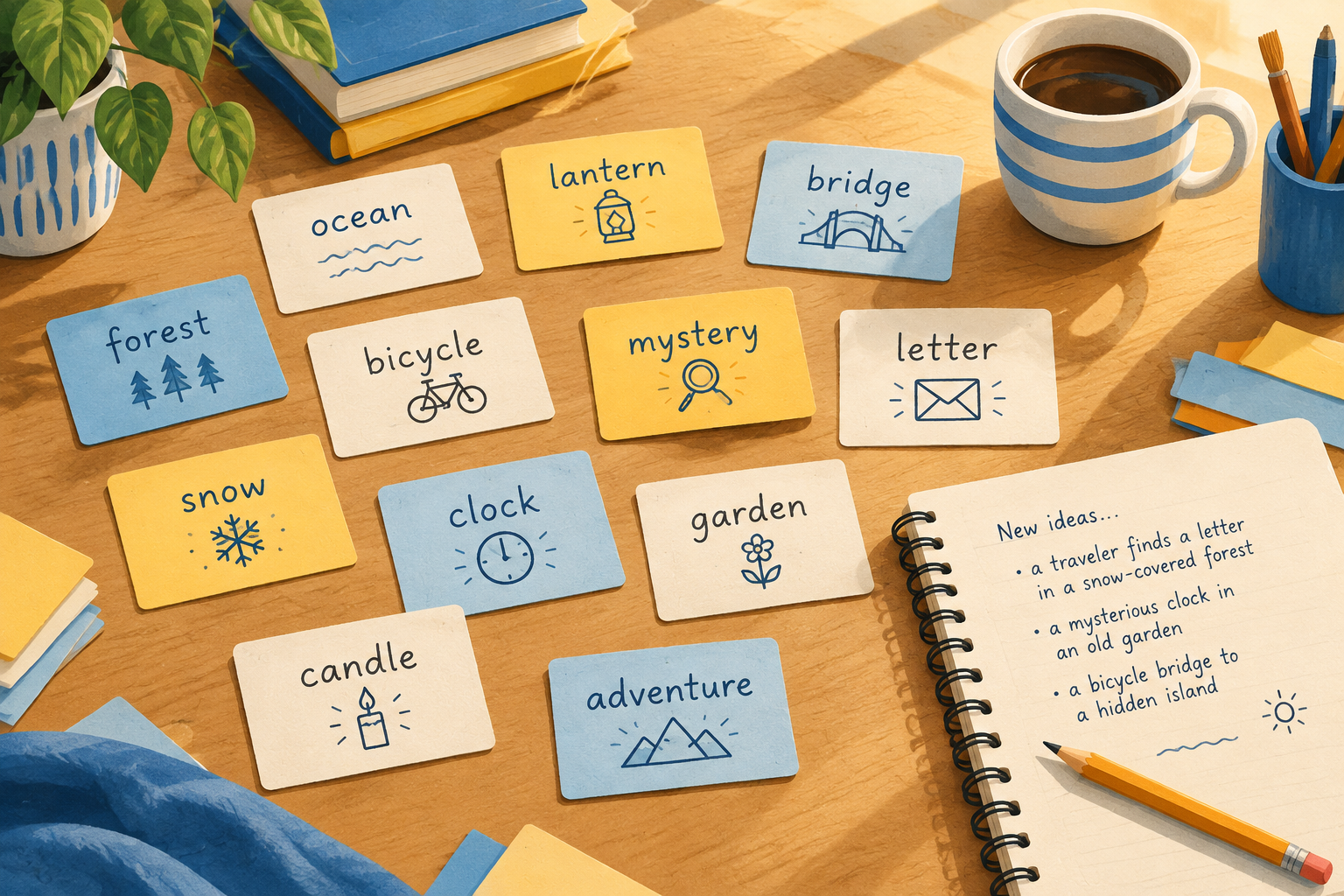
Writing can be challenging when you are staring at a blank page and waiting for the perfect idea to appear. Many writers, students, teachers, and storytellers use simple creative exercises to make starting easier. One of the most flexible methods is using random words for writing as inspiration.
A random word can introduce a new character, create a surprising setting, suggest a conflict, or push a writer toward ideas they would not normally explore. Because the word is chosen without a planned connection, it encourages curiosity and experimentation instead of perfection.
Whether you are writing a short story, a poem, a journal entry, a classroom activity, or a game, random word prompts can help you begin. A single word such as "lantern," "ocean," or "whisper" can lead to dozens of possible directions.
This guide explains how random words work as writing prompts, practical ways to use them, examples for different writing styles, and how tools like a random word generator can make brainstorming faster.
What Are Random Words for Writing?
Random words for writing are words selected without a specific connection to a writer's current idea. The purpose is not to find the "right" word but to create a starting point that encourages imagination.
Traditional brainstorming often begins with a topic you already know. Random word exercises work differently. They introduce an outside element that forces your brain to make connections.
For example, imagine receiving these three random words:
- Lighthouse
- Feather
- Clock
A writer might create a story about a lighthouse keeper who discovers a mysterious feather that stops time. Another writer might write a poem about memories, change, and passing moments. The same words can create completely different results depending on the writer's perspective.
Random prompts are useful because they remove some of the pressure of creating from nothing. Instead of asking, "What should I write about?" you can ask, "What can I do with this word?"
Why Random Word Prompts Help Writers
They Break Creative Blocks
Creative blocks often happen when writers judge ideas too quickly. A random prompt creates a small challenge that shifts attention away from self-criticism.
Instead of searching for a perfect concept, you focus on exploration. Even a strange combination of words can become interesting when you give yourself permission to experiment.
For example, a writer who receives the words "mirror" and "forest" might initially think they do not belong together. After a few minutes of brainstorming, they may imagine a magical forest where mirrors reveal hidden memories.
They Encourage New Perspectives
Writers naturally return to familiar themes, characters, and settings. Random words introduce unfamiliar directions.
A mystery writer who usually creates city-based stories might receive the word "garden" and discover an entirely new location for a scene. A poet who often writes about relationships might receive the word "machine" and explore human emotions through technology.
They Build a Consistent Writing Habit
Writing regularly is often more important than waiting for inspiration. Random prompts make it easier to practice because they provide an immediate starting point.
A simple daily exercise can be:
- Choose three random words.
- Write for ten minutes without editing.
- Review the strongest ideas afterward.
- Save interesting concepts for future projects.
Over time, these short sessions can create a collection of characters, scenes, and story ideas.
How to Use Random Words as Writing Prompts
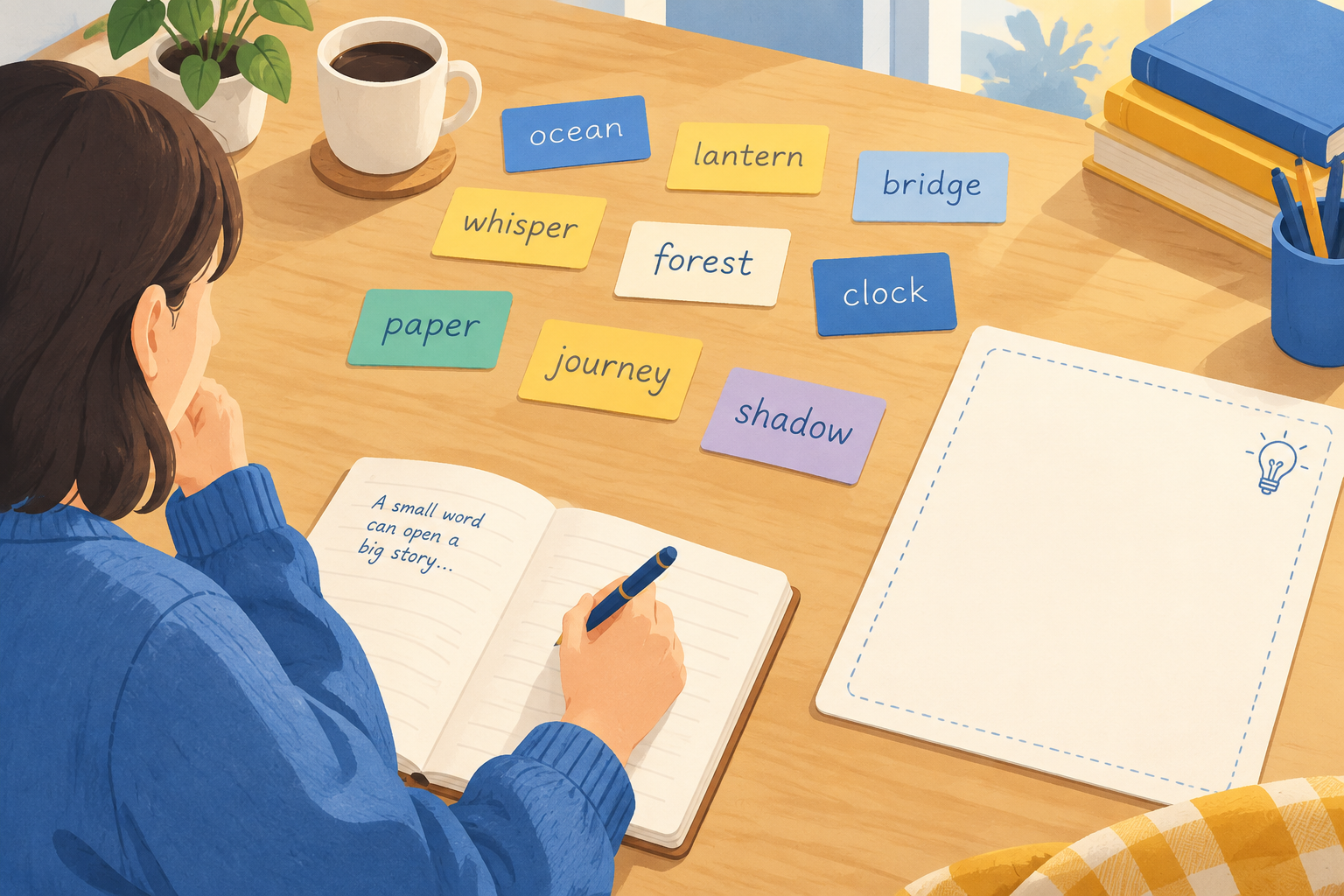
There are many ways to turn random words into useful writing exercises. The best approach depends on your goals and the type of writing you enjoy.
Method 1: Use One Word as a Story Starter
The simplest exercise is choosing one word and asking questions about it.
For example, the word "key" could lead to questions like:
- Who owns the key?
- What does it unlock?
- Why is it important?
- What happens if someone loses it?
These questions transform a basic word into a possible narrative.
This technique works well for beginners because it focuses on curiosity rather than complicated planning.
Method 2: Combine Multiple Random Words
Using several words creates more creative tension. Try combining three unrelated words and finding a connection.
Example prompt words:
- Volcano
- Bicycle
- Photograph
Possible story idea:
A photographer travels by bicycle to document a volcano that scientists believe has a hidden message inside its lava patterns.
The goal is not to create a realistic idea immediately. The goal is to practice making connections.
Method 3: Match Words With Different Genres
A random word can change meaning depending on the genre.
The word "shadow" could become:
- A horror story about an unexplained presence
- A fantasy story about a magical companion
- A romance story about someone hiding their feelings
- A science fiction story about a strange space phenomenon
Try selecting a random word and rewriting it in several genres. This is a useful exercise for writers who want to expand their range.
Method 4: Use Random Words for Character Development
Random words do not have to create entire stories. They can help develop characters.
Choose a word and connect it to a fictional person:
- What memory does this word remind them of?
- Why do they dislike or love this thing?
- How does it reveal their personality?
For example, the word "train" might reveal that a character left home years ago and still remembers the journey. The word becomes a doorway into their history.
Random Word Prompt Ideas for Different Types of Writing
Different writing goals benefit from different kinds of prompts. Here are examples you can adapt.
Fiction Writing Prompts
Use random words to create scenes, conflicts, and characters.
Examples:
- A forgotten letter
- A broken compass
- A silent village
- A hidden staircase
- A borrowed name
A useful exercise is choosing two or three words and writing a scene where every word matters.
Poetry Writing Prompts
Poetry often benefits from unusual combinations and sensory details.
Try prompts like:
- Winter + music
- Glass + memory
- River + secret
- Candle + distance
Ask yourself what emotions or images these words create.
Journal Writing Prompts
Random words can also make personal journaling easier.
Examples:
- Door: What opportunities or changes are you thinking about?
- Garden: What are you currently growing or improving?
- Map: Where do you want to go next?
The word does not need to describe your life directly. It only needs to inspire reflection.
Classroom and Group Activities
Teachers can use random word prompts for quick writing exercises, vocabulary practice, and storytelling games.
A classroom activity might include:
- Give students three random words.
- Ask them to write a short paragraph connecting all three.
- Let volunteers share different interpretations.
Because each student approaches the words differently, the activity encourages creativity and discussion.
For word games, random prompts can also support activities such as drawing or acting challenges. You can explore related tools like a Pictionary word generator or a charades word generator for group activities.
Using Random Word Generators for Writing Practice
A random word generator can make prompt creation quick and convenient. Instead of searching through dictionaries or lists, writers can instantly receive new ideas.
Different generators can support different types of exercises. For example, a random noun generator can help create objects, places, and characters. A random verb generator can add action to a scene, while an adjective generator can help writers describe people, emotions, or settings.
Using different word categories can make exercises more focused. A writer working on character creation might combine a noun, adjective, and verb. A poet might prefer abstract nouns and descriptive words.
The important part is not the tool itself but the creative process that follows. A generated word is only the beginning. The writer decides what meaning, story, or emotion it develops into.
Practical Creative Writing Warm Ups
Here are several short exercises you can try whenever you need inspiration.
Five-Minute Word Expansion
Choose one random word and write everything associated with it for five minutes. Do not edit or organize your thoughts. The goal is to discover unexpected connections.
Three-Word Story Challenge
Generate three random words and write a complete story idea using all of them. Challenge yourself to include each word naturally.
Opposite Interpretation Exercise
Choose a word and write about it from an unexpected viewpoint. For example, write about "storm" from the perspective of a sailor who loves storms instead of fearing them.
Object With a Secret Exercise
Choose an everyday object and imagine it has a hidden purpose or history.
A simple object like a key, cup, or notebook can become the center of an entire story.
FAQ About Random Words for Writing
How do random words help with writing ideas?
Random words help by giving writers a starting point that encourages association and experimentation. They can inspire characters, settings, conflicts, descriptions, and themes that may not appear through ordinary brainstorming.
How many random words should I use for a writing prompt?
There is no fixed number. One word is useful for quick exercises, while three to five words can create more challenging prompts. Beginners often find one to three words easier to manage.
Can random word prompts help beginner writers?
Yes. Random prompts are especially useful for beginners because they remove the pressure of inventing an idea from nothing. They provide a simple challenge that allows writers to focus on practicing creativity.
Can I use random words for classroom writing activities?
Yes. Teachers can use random words for vocabulary practice, storytelling exercises, group challenges, and creative writing warm ups. Students can compare how different people interpret the same prompts.
Are random word generators useful for professional writers?
Professional writers can use random word generators as brainstorming tools. They can help explore alternative ideas, develop scenes, create character details, or overcome moments when a project feels stuck.
Start Creating With Random Word Prompts
Random words for writing are a simple way to make creativity more accessible. A single unexpected word can become the beginning of a story, poem, character, or new idea.
Whether you are practicing daily writing, teaching a class, or looking for inspiration for your next project, experimenting with random prompts can help you discover possibilities you may not have considered.
Ready to try a new prompt? Use the random word generator to create your next writing challenge and turn unexpected words into fresh ideas.
FAQ
How many words should a writing prompt have?
Three to five. More constraints start writing the piece for you instead of sparking it.
Can I keep prompts across sessions?
Yes — save words to the built-in saved-words list or export any generation as TXT.
Is using random prompts cheating?
No. Every prompt system, from workshops to submission calls, gives external constraints. What matters is what you build inside them.
How long should a warm-up draft be?
Fifteen minutes or one page, whichever comes first. Warm-ups that grow longer become projects, and projects need different energy.