Random Words for Pictionary and Charades
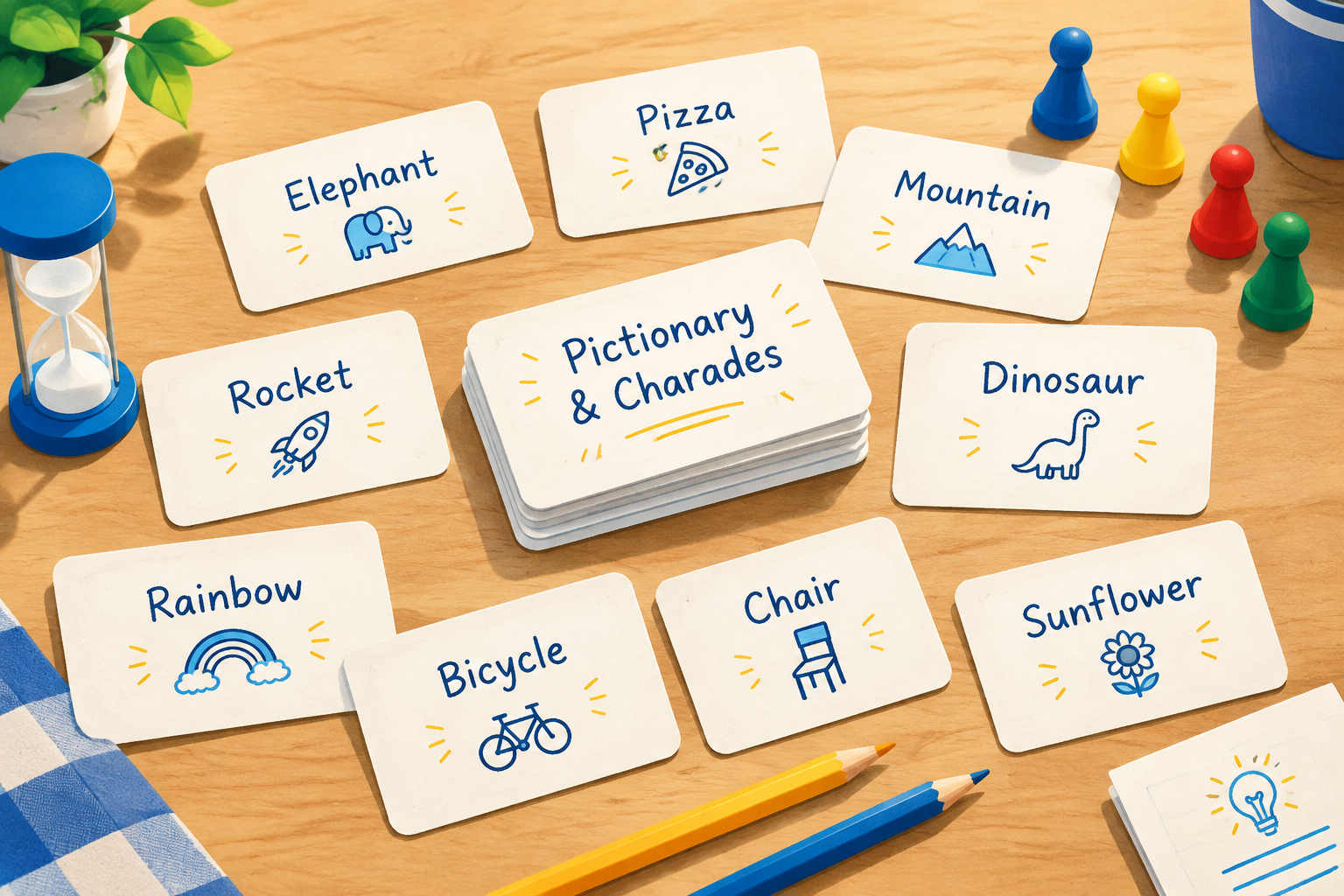
Choosing the right words can make or break a round of Pictionary or charades. A great word should be recognizable enough that players have a chance to guess it, but interesting enough to create funny moments and creative challenges. The best pictionary and charades words are balanced: they encourage imagination, teamwork, and quick thinking without making every turn predictable.
Whether you are planning a family game night, a classroom activity, a party, or a team-building event, a well-organized word list saves time and keeps the game moving. Instead of spending minutes thinking of ideas between rounds, players can use prepared lists or a tool such as the pictionary word generator to quickly create fresh prompts.
This guide explains how to choose fair words, organize categories, adjust difficulty levels, and create entertaining rounds for different groups.
Why good Pictionary and charades words matter
Pictionary and charades depend on communication without directly saying the answer. In Pictionary, players rely on drawings, shapes, and visual clues. In charades, they use movement, expressions, and actions. Because the clues are limited, the chosen word has a major impact on the experience.
A strong word list helps by providing:
- Fair challenges: Players have a realistic chance to guess the answer.
- Creative opportunities: Words inspire unusual drawings and performances.
- Variety: Different categories prevent repeated ideas.
- Better pacing: Players spend more time playing and less time choosing prompts.
For example, a word like “cat” may be too easy for many groups because nearly everyone can identify it quickly. A word like “astronaut” creates more opportunities for creative drawings and actions while remaining familiar. A word like “microscope” may be better suited for advanced players because it requires more specific clues.
How to create a fair word list
A fair word list should match the people playing. A group of young children, a classroom of students, and a group of adults may all need different vocabulary levels.
Consider the players’ age and experience
For younger players, choose familiar objects, animals, foods, and activities. Examples include:
- Bicycle
- Ice cream
- Dinosaur
- Tree
- Rainbow
- Robot
Older players may enjoy more abstract or specific words:
- Time travel
- Detective
- Volcano eruption
- Graduation
- Secret mission
The goal is not to make every word difficult. A good game includes a mixture of easy, medium, and challenging prompts so everyone gets moments of success.
Mix concrete and action words
Concrete nouns are usually easier to draw or act out. Examples include “castle,” “pizza,” and “penguin.” Action words create movement-based challenges, especially for charades. Examples include “juggling,” “dancing,” and “climbing.”
A balanced list might include:
- 40% simple objects or animals
- 30% actions or activities
- 20% places or situations
- 10% creative or unusual ideas
These percentages are not strict rules, but they provide a useful starting point when building a large collection.
Popular categories for Pictionary and charades
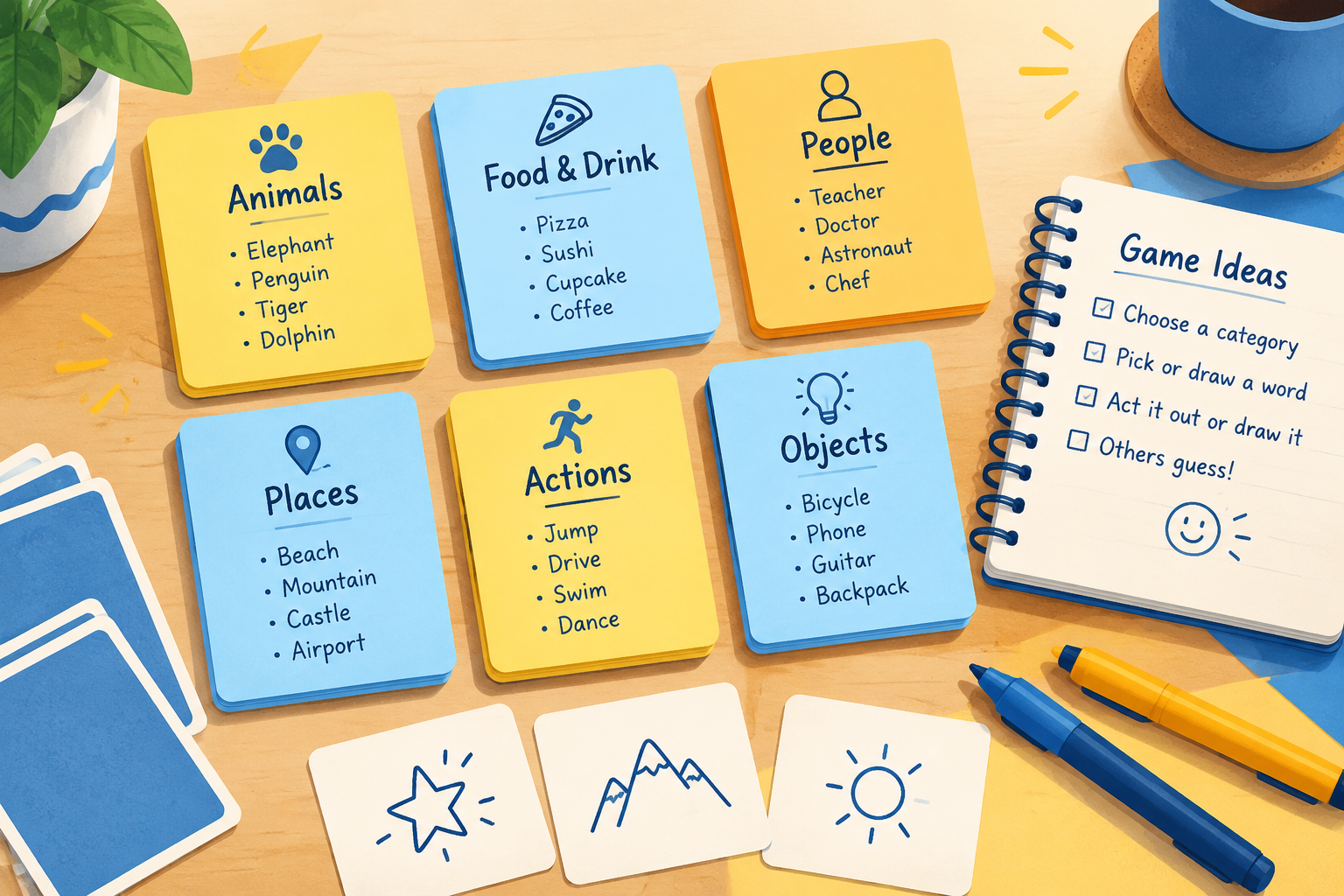
Organizing words into categories makes it easier to create themed rounds. It also helps hosts adjust the game for different occasions.
Animals
Animal words are classic choices because they are easy to understand and often fun to draw or act out.
Examples:
- Elephant
- Penguin
- Butterfly
- Kangaroo
- Octopus
- Turtle
Animals work especially well for children because players can use recognizable shapes and movements.
Food and drinks
Food words create entertaining challenges because many items have distinctive appearances.
Examples:
- Hamburger
- Watermelon
- Popcorn
- Sandwich
- Cupcake
- Spaghetti
Food categories are useful for casual parties because they usually include words that everyone knows.
Movies, characters, and stories
Entertainment themes can make games more exciting for groups with shared interests. However, hosts should choose recognizable concepts rather than extremely specific references that only a few people understand.
Examples:
- Superhero
- Pirate
- Wizard
- Dragon
- Treasure hunt
Everyday objects
Common objects are reliable because players can quickly connect drawings or actions to possible answers.
Examples:
- Backpack
- Umbrella
- Camera
- Clock
- Toothbrush
Nature and places
Nature and location words create opportunities for creative clues.
Examples:
- Beach
- Mountain
- Forest
- Waterfall
- Island
Word game round ideas for different occasions
The same word list does not work equally well for every event. Creating themed rounds can make games feel more organized and memorable.
Family game night
Family groups often include different ages, so a mixed list works best. Include simple nouns, funny actions, and familiar situations.
A sample round:
- Puppy
- Flying a kite
- Pizza
- Castle
- Rainstorm
Classroom activities
Teachers can use Pictionary and charades as vocabulary practice, review activities, or icebreakers. Words can be connected to lessons, reading topics, or general vocabulary.
For example, a science class might use:
- Planet
- Volcano
- Energy
- Animal habitat
- Weather
A language class might combine a word list with a random word generator to practice describing unfamiliar vocabulary.
Party games
For parties, include humorous and energetic prompts. Actions and situations often create the funniest moments.
Examples:
- Dancing robot
- Invisible wall
- Lost tourist
- Sleepwalking
- Cooking disaster
How to adjust difficulty levels
A successful game usually needs multiple difficulty levels. If every word is easy, players may lose interest. If every word is difficult, the game can become frustrating.
Easy words
Easy prompts are familiar and quickly recognizable.
Examples:
- Dog
- House
- Sun
- Book
- Car
Medium words
Medium prompts require more creative thinking.
Examples:
- Airport
- Pirate ship
- Camping
- Scientist
- Roller coaster
Hard words
Hard prompts challenge experienced players.
Examples:
- Time machine
- Mystery novel
- Ancient civilization
- Artificial intelligence
- Space exploration
Using a range of difficulty levels keeps every round competitive.
Using random generators for faster game preparation
Creating word lists manually can take time, especially when preparing dozens or hundreds of prompts. Random generators provide a quick way to discover new ideas while keeping rounds unpredictable.
A pictionary word generator can help create drawing prompts, while a charades generator can provide action-based ideas. General vocabulary tools such as a random noun generator are also useful when you need objects, places, or concepts.
Random tools are especially helpful when:
- A group has already used common word lists.
- A teacher needs new classroom activities.
- A host wants to prepare multiple rounds quickly.
- Players want surprise prompts during a game.
The best approach is to use generated words as inspiration and adjust them for the players. A word that works well for adults may need to be replaced with a simpler option for children.
Tips for making games more enjoyable
Small rule adjustments can improve the experience for everyone.
Keep rounds short
Short turns maintain energy and give more people a chance to participate. Long turns can make players wait too much between guesses.
Avoid unfair categories
Some categories are naturally harder to draw or act out. If a category creates repeated confusion, mix it with easier prompts.
Encourage creativity
The funniest moments often happen when players interpret words in unexpected ways. Avoid judging drawings or performances too strictly. The purpose is communication and fun.
Prepare extra words
Always have more prompts than you expect to use. Groups often move faster than planned, especially when players become familiar with the rules.
FAQ
What makes a good Pictionary word?
A good Pictionary word is recognizable, visually interesting, and possible to represent with a drawing. Objects, animals, places, and actions usually work well because players can create clear visual clues.
How many words do I need for a game of Pictionary or charades?
The number depends on the group size and game length. A short game may need 30 to 50 words, while a larger event may require hundreds of prompts. Preparing extra words helps avoid interruptions.
Can random words work for classroom games?
Yes. Random words can support vocabulary practice, speaking activities, and creative thinking exercises. Teachers can filter or modify generated words to match the lesson level.
Should Pictionary and charades use the same word lists?
Some words work for both games, but separate lists often create better results. Pictionary benefits from visual concepts, while charades works best with actions, emotions, and activities.
How can I make a word list fair for everyone?
Use a mixture of easy, medium, and difficult prompts. Avoid words that depend on specialized knowledge unless the group shares that interest.
Start creating your next word game round
A great Pictionary or charades session begins with the right prompts. Instead of recycling the same ideas, create fresh rounds with organized categories and balanced difficulty.
When you need quick inspiration, try the pictionary word generator or explore other word tools from Random Word Kit to prepare your next game night, classroom activity, or group challenge.
FAQ
What makes a word easy to draw?
Physical objects and animals — things with a shape. Easy packs favor short, concrete nouns; hard packs include abstract ideas and compounds.
Can one list serve both games?
Drawing and acting reward different words, so each game has its own generator with its own difficulty packs.
How many clues do I need per hour?
Roughly thirty to forty clues for an hour of play with two teams — generate fifty and you have margin.