
What Is a Random Word Generator?
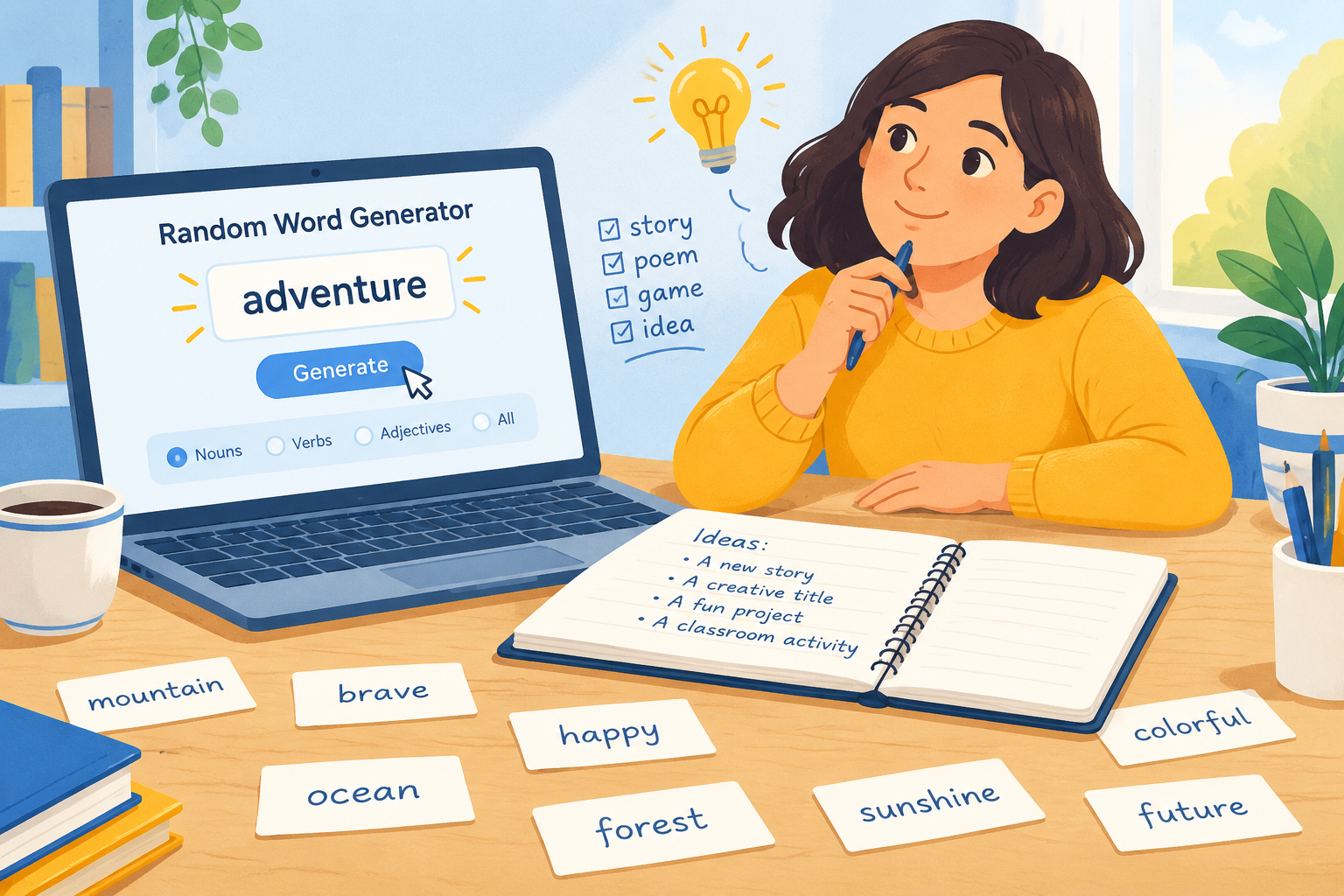
A random word generator is a digital tool that selects words automatically from a collection of possible options. Instead of choosing a word manually from a dictionary, list, or memory, users can generate a word instantly with the click of a button. These tools are commonly used for creative writing, classroom activities, vocabulary practice, storytelling exercises, and word-based games.
At its simplest, a random word generator works like a digital word picker. It contains a list of words, applies a selection method, and displays one or more results. The generated words may be completely random, or they may follow settings chosen by the user, such as selecting nouns, verbs, adjectives, or words of a certain length.
Random word tools are useful because they remove the pressure of finding the “perfect” idea before starting. A surprising word can become a writing prompt, a discussion topic, or a challenge that encourages creative thinking.
How Word Generators Work
The basic idea behind a word generator is simple: a computer selects an item from a prepared collection. In the case of a random word generator, the collection is usually a database or list of words.
When a user requests a word, the tool performs several steps:
- It accesses a word list containing possible results.
- It applies selection rules, such as word category or quantity.
- It chooses one or more words from the available options.
- It displays the result for the user.
The process is similar to drawing a name from a hat, except the computer can handle thousands of possible words quickly and consistently.
A more advanced generator may include filters. For example, a user looking for creative writing ideas may want only nouns, while someone practicing vocabulary may want challenging adjectives. Specialized tools such as a random noun generator or random adjective generator narrow the results to a specific type of word.
What Makes a Random Word Generator Different From a Dictionary?
A dictionary is designed to provide definitions, pronunciation information, spelling guidance, and usage examples. A random word generator has a different purpose: discovery through selection.
A dictionary answers questions like:
- What does this word mean?
- How is this word pronounced?
- How can this word be used?
A random word generator helps answer questions like:
- What idea should I write about?
- What word can I use for a game?
- What vocabulary should I practice today?
Many people use both tools together. A writer might generate a random word first, then look up its meaning and examples before using it in a story or article.
Common Uses of Random Word Generators
Creative Writing and Brainstorming
Writers often use random words to overcome creative blocks. A single unexpected word can become the starting point for a character, setting, scene, or plot idea.
For example, a writer may generate the words “lantern,” “river,” and “mirror.” These three unrelated ideas could inspire a mystery story about a hidden message discovered near a river at night.
Random prompts are especially helpful for:
- Short stories
- Poetry exercises
- Character development
- Creative journaling
- Writing practice
A random word does not need to become the final idea. Its main purpose is to create a starting point and encourage new connections between concepts.
Classroom Learning and Vocabulary Practice
Teachers and students can use word generators as interactive learning tools. They can help introduce new vocabulary, support spelling exercises, and make lessons more engaging.
Examples include:
- Asking students to define a generated word
- Creating sentences using random vocabulary
- Comparing related and unrelated words
- Practicing parts of speech
Students can also combine generated words with writing assignments. A teacher might ask students to use five random words in a paragraph, encouraging both creativity and language skills.
Word Games and Group Activities
Random words are useful for games that depend on quick thinking. Players can use generated words for guessing games, drawing challenges, and storytelling competitions.
For example, a random word generator for charades can provide prompts that players act out without needing to prepare a list in advance. A random word generator for Pictionary can create drawing challenges for groups.
Types of Random Word Generators
Not all word generators serve the same purpose. Different versions focus on different types of language tasks.
Random Noun Generators
Noun generators provide names of people, places, objects, or concepts. They are useful when a writer needs a subject or a visual idea.
A generated noun such as “castle” or “forest” can become the foundation for a story setting or creative exercise.
Random Verb Generators
Verb generators focus on actions. They can help writers create more dynamic sentences by suggesting activities and movement.
A writer who repeatedly uses the same action words may use a random verb generator to discover alternatives and expand vocabulary.
Random Sentence Generators
Sentence generators create complete phrases rather than individual words. These tools can be useful for writing practice, language exercises, and idea generation. A random sentence generator can provide a starting point when someone needs inspiration quickly.
Random Letter and Word Challenge Tools
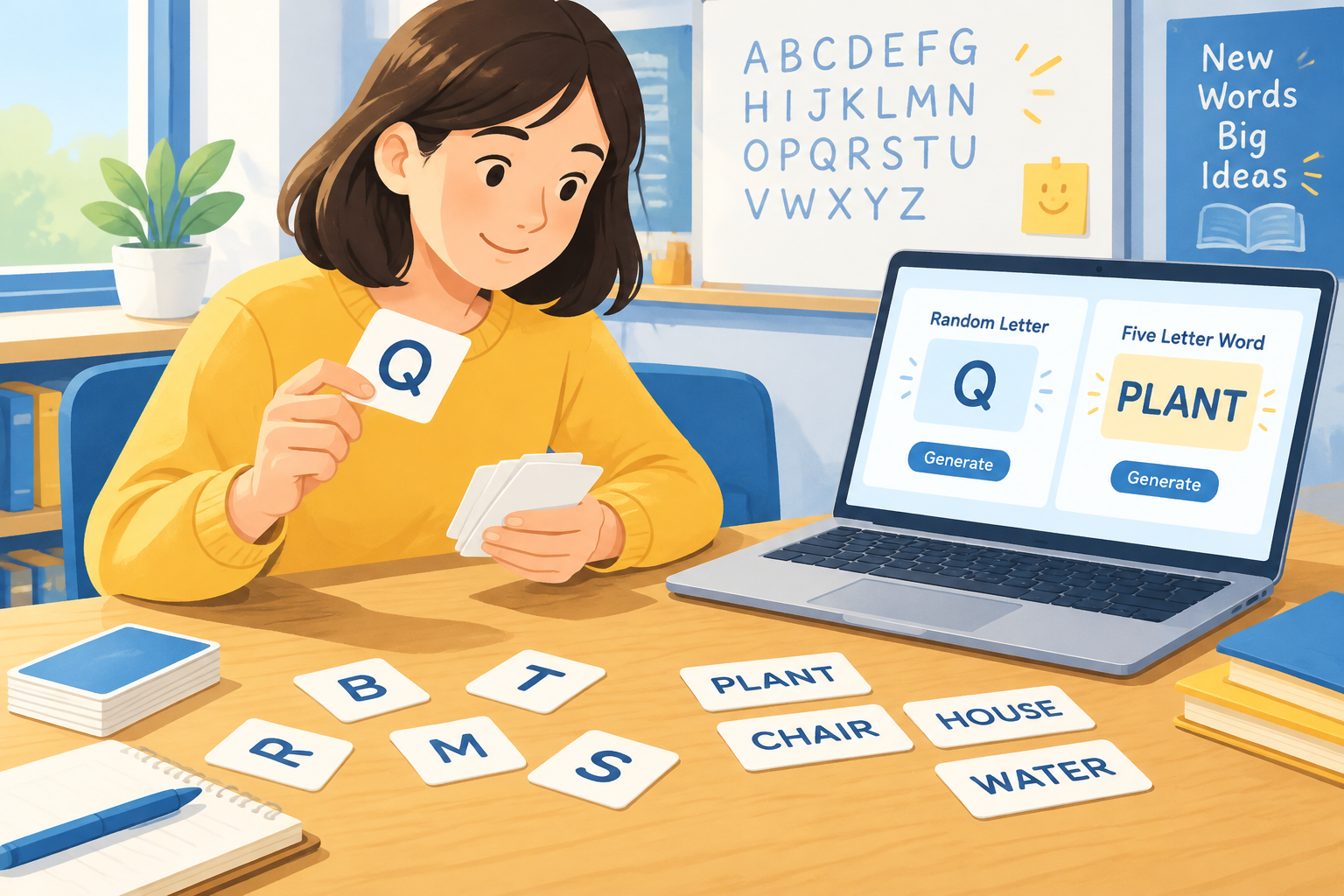
Some activities require more specific constraints. A random letter generator can help with alphabet games, while a five-letter word generator can support word puzzles that require a specific word length.
Are Random Word Generators Truly Random?
The meaning of “random” in digital tools is usually based on computer algorithms. A generator does not make choices the way a person does. Instead, it uses programmed methods to select results from available options.
For most everyday uses, this level of randomness is enough. A writing prompt tool does not need scientific randomness; it simply needs to provide unexpected and varied results.
The quality of a random word generator also depends on the word list behind it. A useful tool should contain appropriate, recognizable words and avoid unnecessary or unsuitable entries, especially when used by students or in public activities.
How to Use a Random Word Generator Effectively
A random word generator works best when users treat the results as inspiration rather than strict instructions. Here are some practical approaches:
Combine Multiple Words
Generating several words at once can create stronger ideas. Try connecting unrelated terms and asking how they might interact.
Add Your Own Rules
Set personal challenges, such as writing a paragraph that includes three generated words or creating a story using a specific category.
Use Words Outside Your Comfort Zone
Unexpected vocabulary can introduce new perspectives. Exploring unfamiliar words can improve creativity and language skills.
Mix Randomness With Research
After generating a word, learn more about it. Looking up definitions, examples, and related terms can turn a simple prompt into a deeper learning activity.
Frequently Asked Questions
What is a random word generator used for?
A random word generator is used for creating writing prompts, practicing vocabulary, playing word games, brainstorming ideas, and supporting classroom activities. It provides quick word suggestions when users need inspiration or a challenge.
How does a word randomizer choose words?
A word randomizer selects words from a stored list using a computer-based selection process. Some tools allow users to filter results by category, such as nouns, verbs, adjectives, or word length.
Can a random word generator help writers?
Yes. Writers can use random words to overcome creative blocks, develop stories, create characters, or practice descriptive writing. Random prompts encourage people to explore ideas they may not have considered.
Are random word generators useful for students?
Yes. Students can use them for vocabulary practice, sentence creation, spelling exercises, and creative assignments. Teachers can adapt generated words into games and classroom activities.
What is the difference between a random word generator and a random noun generator?
A random word generator may produce many types of words, while a random noun generator focuses only on nouns. Specialized generators are useful when a specific type of word is needed.
Start Exploring Random Words
Random word generators are simple tools with many practical uses. Whether you are writing a story, planning a classroom activity, or looking for a fun challenge, a carefully selected random word can help you discover new ideas.
Try a random word tool to create your next prompt, explore new vocabulary, or add variety to your word games.
FAQ
Are the words truly random?
Selection is uniform over the filtered pool — every matching word has the same chance — which is what "random" usefully means for word games and prompts.
Can the same word appear twice in one list?
No. Draws are without replacement, so a single list never repeats a word.
Does generating words send my data anywhere?
No. Generation runs entirely in your browser; only optional lookups like definitions hit the server.